More About Diaphragm Compressors
Why Do People in the Industry Use Diaphragm Compressors?
If you are trying to understand why people use diaphragm compressors, then you have come to the right place.
In this article, we will explore the advantages of diaphragm compressors and why they are the preferred choice for many industries. We will also examine the different types of diaphragm compressors and the components of these compressors.
Finally, we will discuss the differences between air and oil-lubricated cylinder head piston or connecting rod compressors and why you should opt for the former over the latter type products.
By the end of this post, you will have better information and understanding of why people use diaphragm compressors and why they are the best technology choice for many applications versus generators to create the gasses onsite.
What Is A Diaphragm Type Compressor?
A diaphragm compressor uses a set of flexible, rotating membranes to compress gas in a chamber. This design is particularly effective for compressing toxic or explosive gasses, because metal-to-metal friction is kept to a minimum.
All PDC company sealless reciprocating diaphragm compressors meet API 618 standards and specifications for non- contaminating gas compression products, so you can rest assured your gas is protected from contamination. They also offer long durability, high capacity and trouble free operation with regular maintenance. Call for a quote on our gas compression products and services.
What Does A Diaphragm Gas Compressor Do?
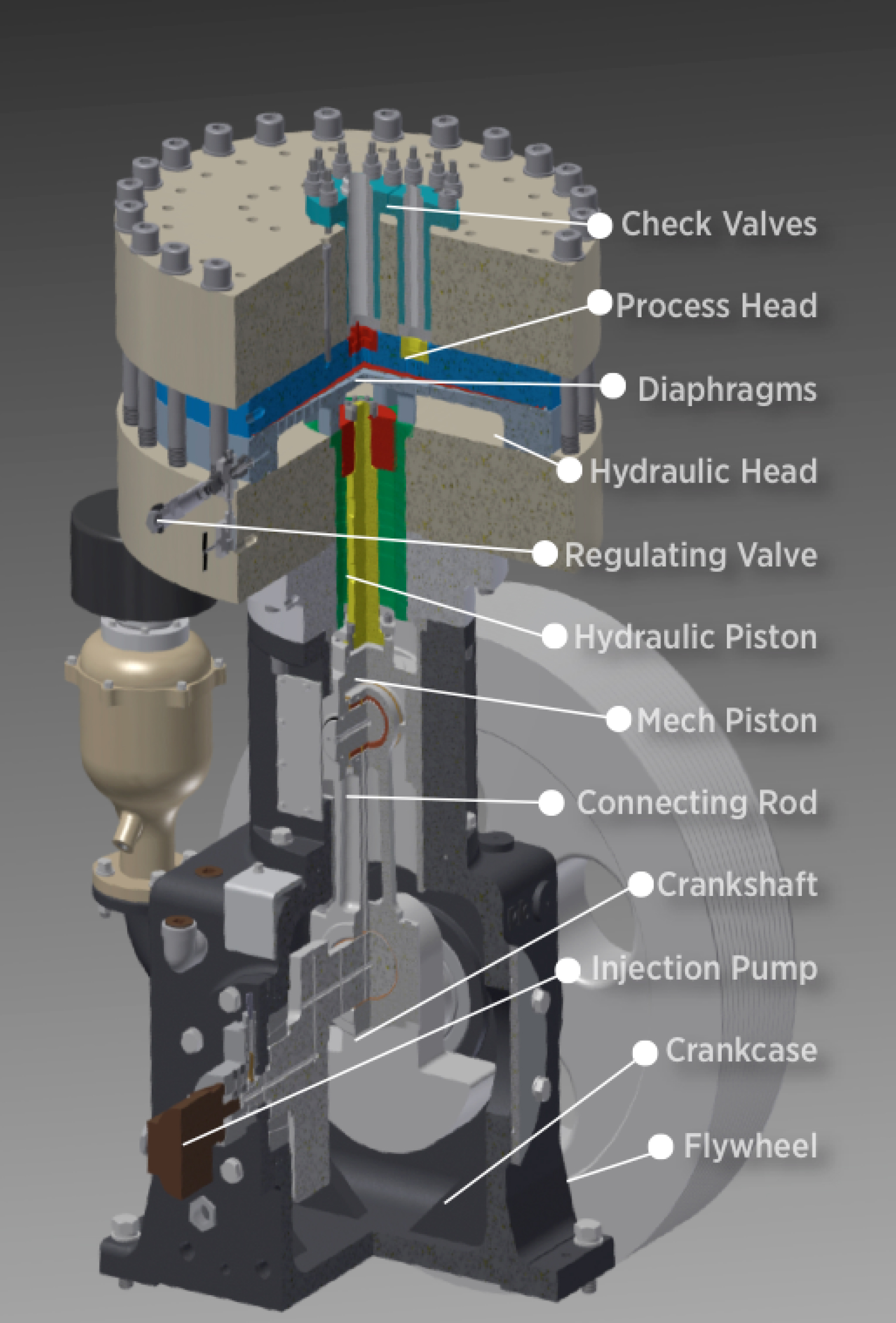
A diaphragm compressor compresses air using a set of flexible membranes that deflect back and forth. The membrane is driven by a rod and crankshaft mechanism that motivates the diaphragm to move up and down, displacing gas in the process head and compressing it to be sent on to the desired application.
As the piston moves down and toward bottom-dead-center (BDC), it creates a higher internal pressure than the external pressure of the process gas inside the cavity. The membrane then sweeps up to TDC, reducing the pressure in the cavity.
Diaphragm compressors are characterized by a high compression ratio, good sealing performance and are resistant to lubricating oil and solid impurities, an example are the PDC industrial diaphragm compressor products. They are particularly suitable for compressed gasses of the highest purity as well as explosive and toxic gasses.
Diaphragm air compressors use three elongated, flexible membranes that flex on the down- stroke of the pump to draw in and compress air from outside the process. As the compressor cycles on its up-stroke, the membranes flex again to reduce the chamber size and compress the gas.
What Is The Mechanism Of Diaphragm Reciprocating Compressor?
A diaphragm compressor is a type of reciprocating compressor with a back-and-forth moving membrane instead of an intake element. The construction of a diaphragm compressor is ideal for pumping explosive and toxic gasses because it prevents hydraulic fluid from coming in contact with the process gas.
The crankshaft and connecting rod mechanism powers the reciprocating diaphragm. During the compressor cycle, the compressor box and the diaphragm come in touch with the pumped fluid (gas or air).
To begin the compression process, the piston ring is pushed toward the BDC. Then, the diaphragm sweeps the cavity towards the Top-Dead-Center position, compressing the process gas. The process gas enters the compression chamber through a check valve and the suction pressure is reduced by the diaphragm.
The oil then helps the membrane flex upward and downward, thereby compressing air or gas inside the cavity. As the internal pressure of the gas goes higher than the external gas pressure, the valve closes and the compression process is complete. The cycle repeats and the compressor continues to operate.
What Are Benefits Of Using A Diaphragm Type Gas Compressor?
Diaphragm compressors are a type of air compressor that uses a set of diaphragm membranes to compress gas. The membranes are flexed on the downstroke and compressed on the upstroke. This process allows the compressor to apply a high level of pressure on the gas being compressed.
Another benefit of using a diaphragm compressor is that it can save energy. This is important since it can help reduce overall energy costs in 24/7 industrial applications.
This type of compressor is best for handling toxic or explosive gasses. It is also a good choice for treating radioactive or inert gasses.
However, you need to make sure that you choose the right compressor for your application. It must be reliable enough to support the strain of pumped gas and it should have the necessary heat resistance and chemical properties.
Is There A Chance Of Seal Failure When Using A High Pressure Gas Compressor?
The chance of seal failure when using a diaphragm compressor is extremely low. However, there are a few things you should be aware of.
One of the most important is selecting a diaphragm seal made of the right material. This can make a huge difference in performance, especially when used in corrosive environments.
Another thing to consider is the type of fill fluid that you use. A proper fill fluid for your specific application is essential to keep the seal lubricated, preventing the formation of hydrogen bubbles that may damage the seal.
Lastly, choosing the right size seal is crucial. It is a good idea to look for a seal that will fit your compressor’s dimensions and allow the flow of the required amount of fill fluid.
The chances of a seal failing are small, but the risk of leaks is still there. The best way to avoid this is to do regular maintenance and ensure that the proper seal is in place.
If you are having trouble with your diaphragm compressor, it is a good idea to consult with an expert about what needs to be done. Long-term, this will save you both time and money.
Is A Membrane Compressor Right for Your Application?
There are several different types of diaphragm compressors available on the market today, each with its own set of advantages and disadvantages. It is important to consider all factors when selecting a compressor for your specific needs – from cost comparisons to maintenance tips.
With this knowledge in hand, you can make an informed decision that will help you get the most out of your diaphragm compressor. Now it is time to take action! Get started by contacting the diaphragm compressor manufacturing experts at PDC Machines and finding one that meets your needs and budget.